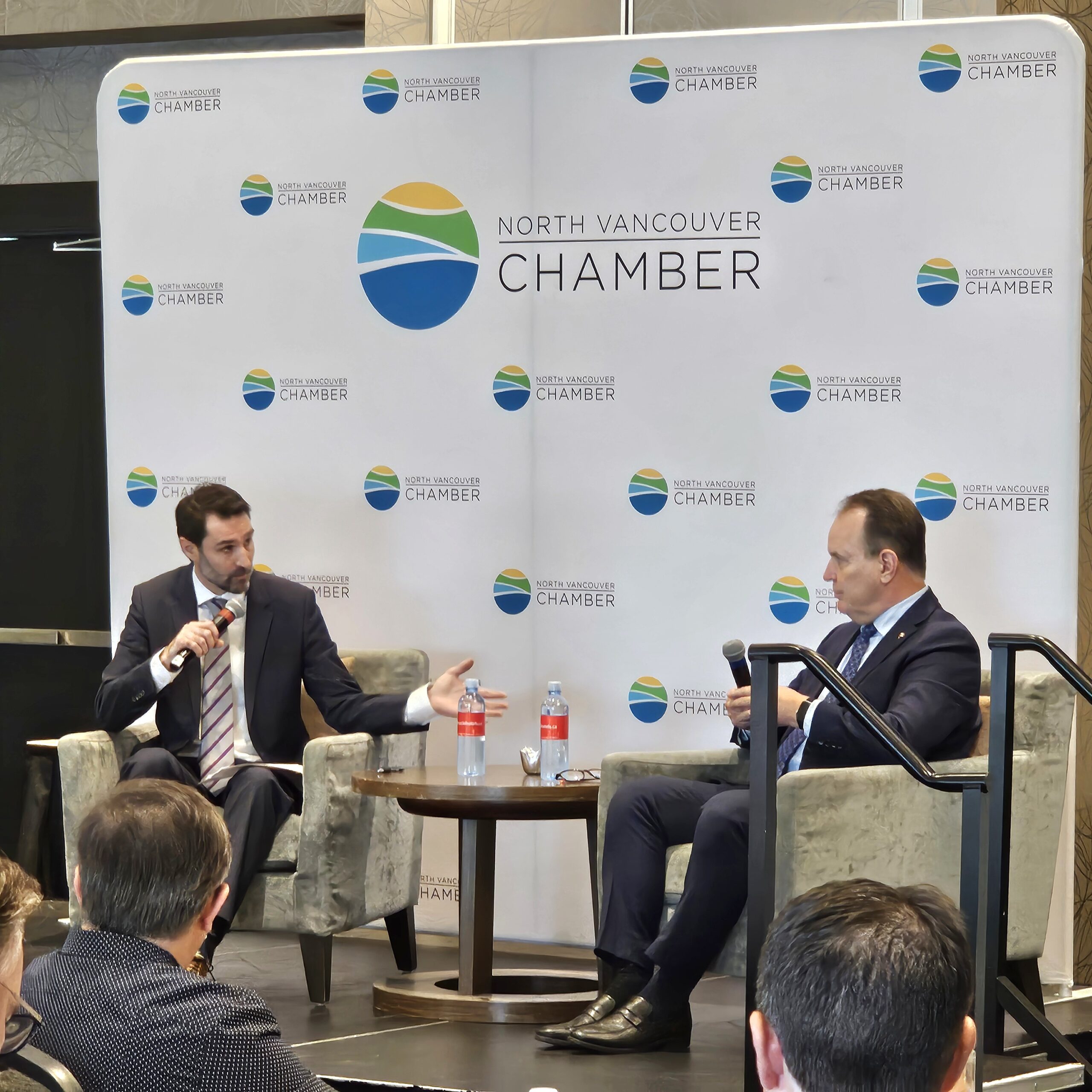
As Canada navigates trade uncertainty and looks to diversify its global markets, one message was clear during the North Vancouver Chamber’s Conversation with the Honourable Steven MacKinnon: transportation will play a central role in Canada’s economic future.
The discussion was particularly relevant here in North Vancouver, home to major port terminals, critical rail and road infrastructure, and businesses directly connected to domestic and global supply chains.
On August 25, business and community leaders, including many from North Vancouver’s waterfront and marine industries, gathered at the Pinnacle Hotel at the Pier for a wide-ranging discussion with the Minister of Transport and Leader of the Government in the House of Commons.
From trade diversification and port capacity to labour stability, marine safety and the North Shore’s transportation bottlenecks, the conversation explored the opportunities and challenges shaping the movement of people and goods in our region and across the country.
Transportation at the centre of North Vancouver’s economy
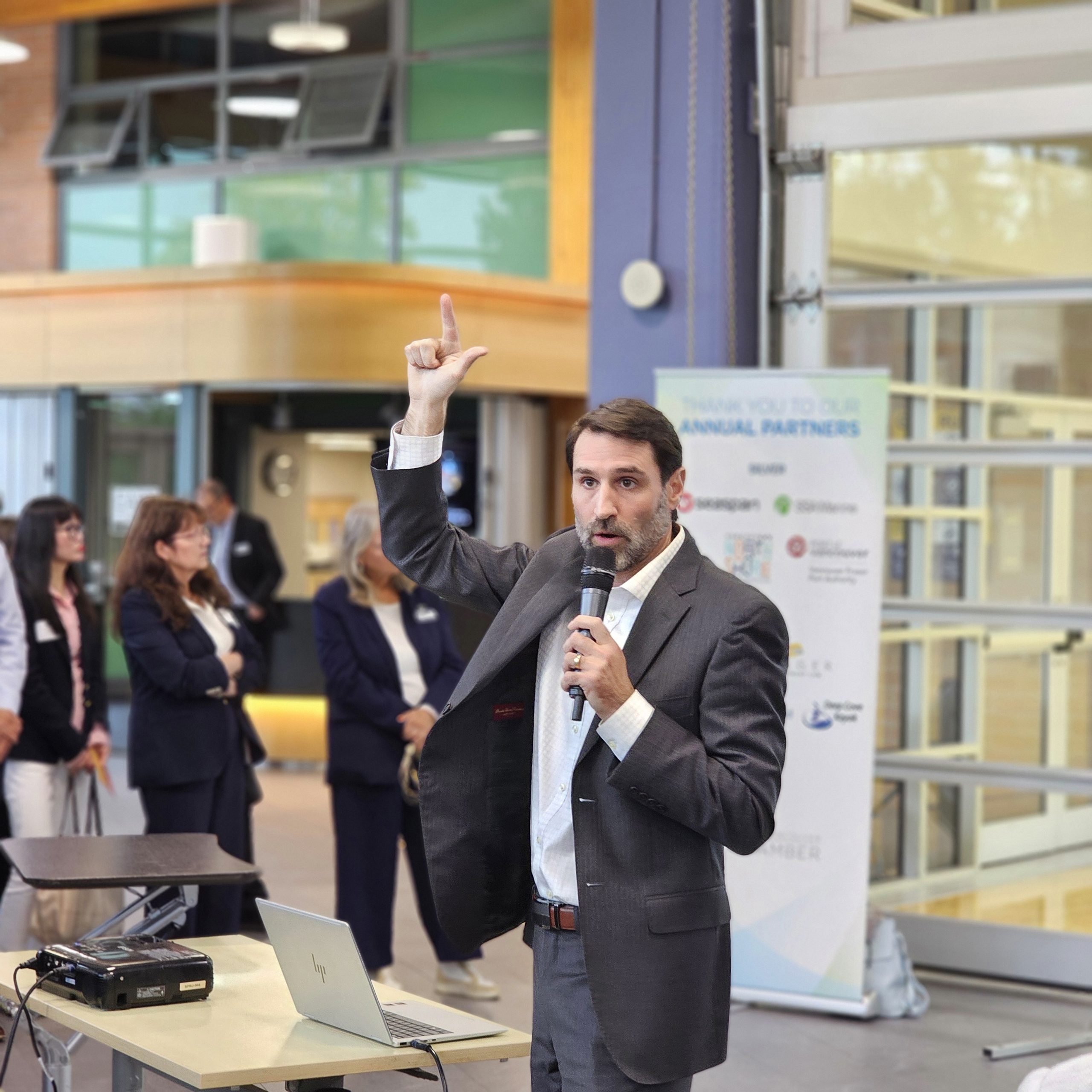
Setting the tone for the conversation, North Vancouver Chamber CEO Jonathan Mosley highlighted the enduring importance of transportation to the local economy.
“Transportation has consistently topped the list of economic issues identified by our members in the North Vancouver Chamber’s annual surveys for the past decade,” he said.
With port terminals, rail infrastructure, roads and transit networks all converging on the North Shore, Jonathan emphasized that transportation decisions have direct consequences for businesses, the movement of goods and the quality of life of those who live and work in the region.
A waterfront perspective from SSA Marine Canada
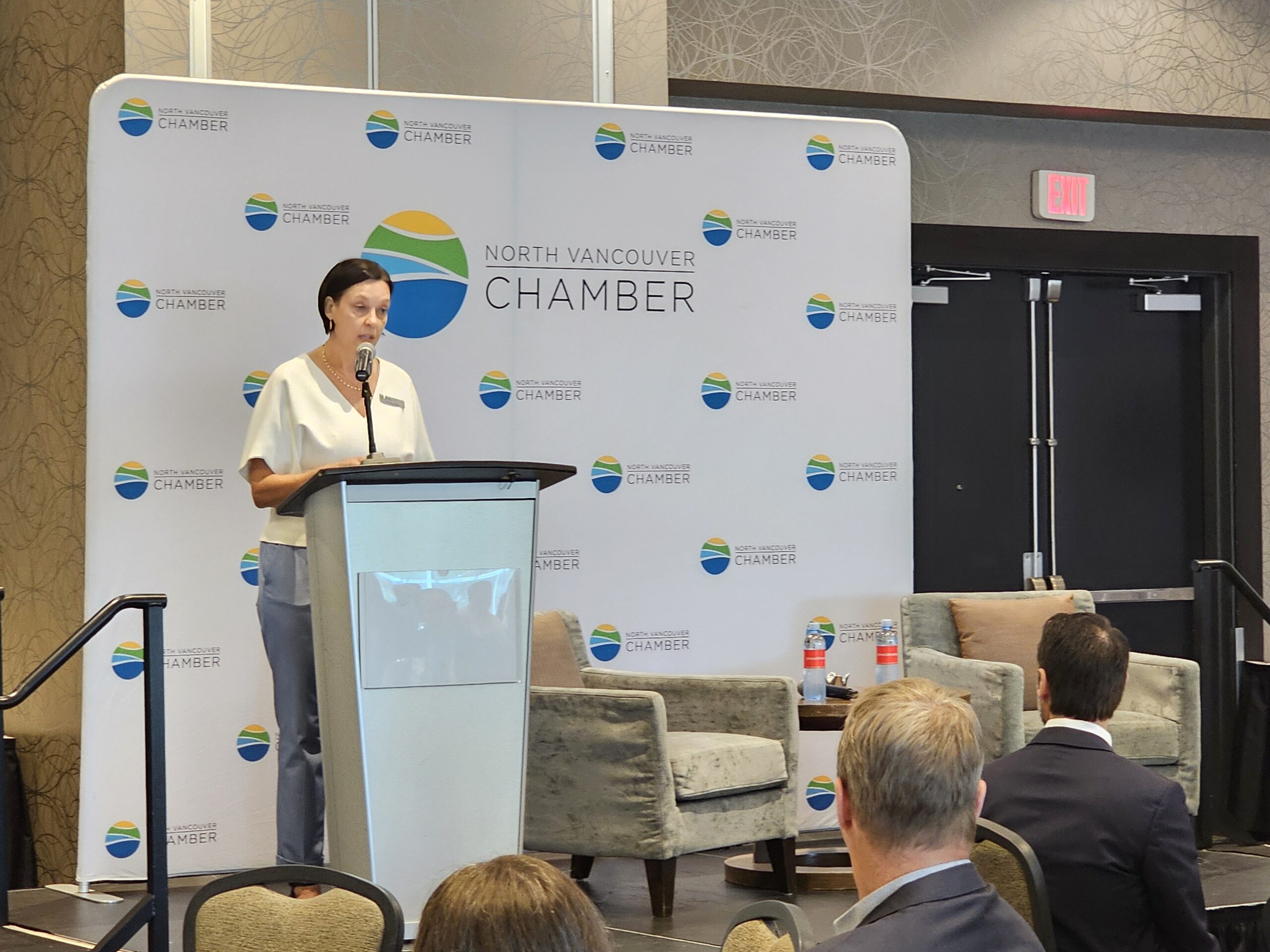
Kim Stegeman-Lowe, President of SSA Marine Canada, opened the conversation by sharing how the company’s operations are directly connected to the movement of goods throughout B.C. and beyond.
“For us, transportation policy is not abstract,” Kim said. “It directly impacts how we effectively import and export goods, serve our customers, support our employees and connect Canadian businesses to markets around the world.”
Against a backdrop of changing supply chains and ongoing trade uncertainty, Kim highlighted the importance of certainty, resilience and investment in transportation infrastructure.
“As Canada looks to strengthen its trade relationships, diversify our markets and build greater resilience, the decisions we make about transportation infrastructure and policy will have a lasting impact on communities like North Vancouver and on Canada’s economy as a whole.”
Building capacity and diversifying trade
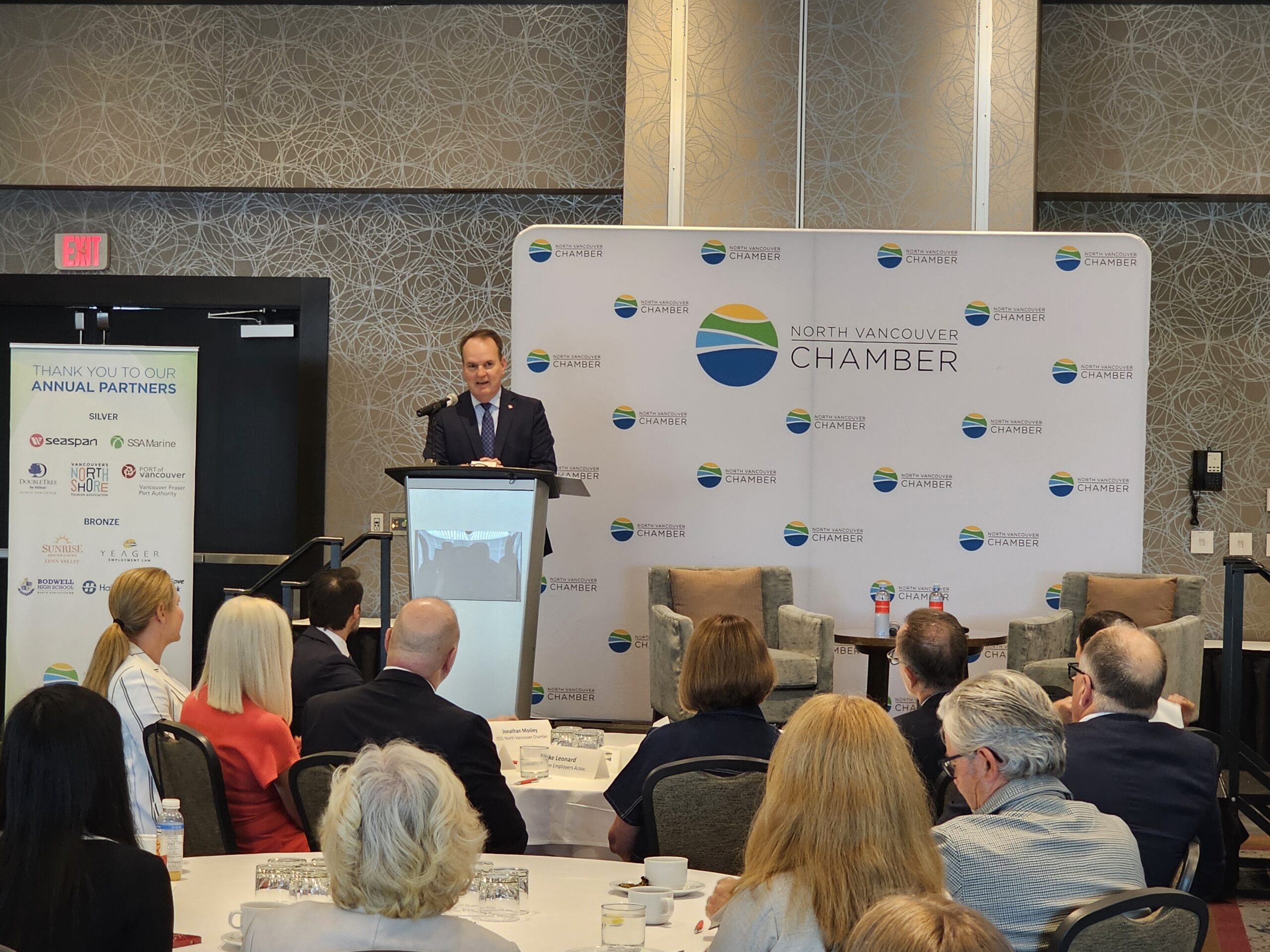
Minister MacKinnon’s remarks focused on the rapidly changing global trade environment and the need for Canada to strengthen its infrastructure, supply chains and access to international markets.
“We know that in moments like this, governments have a choice,” he said. “We can wait, hesitate, or we can build. Now we choose to build.”
“Our plan is straightforward: build the infrastructure Canada needs, strengthen our supply chains, diversify our trading relationships, and create the conditions for Canadian businesses to invest, to grow, to innovate and compete around the world.”
The Minister emphasized that transportation infrastructure is fundamentally an economic issue.
“A company can have the best product in the world,” he said, “but if it cannot move its products reliably, efficiently and affordably, it cannot compete. It’s that simple.”
The discussion also explored the federal government’s efforts to expand trade capacity in British Columbia, including the Port of Vancouver Gateway Strategy and the proposed Roberts Bank Terminal 2 project.
Minister MacKinnon pointed to the importance of increasing Canada’s capacity to reach new markets and reduce reliance on any single trading partner.
“We cannot do that without investing in infrastructure right here in British Columbia,” he said.
Labour stability and building the workforce
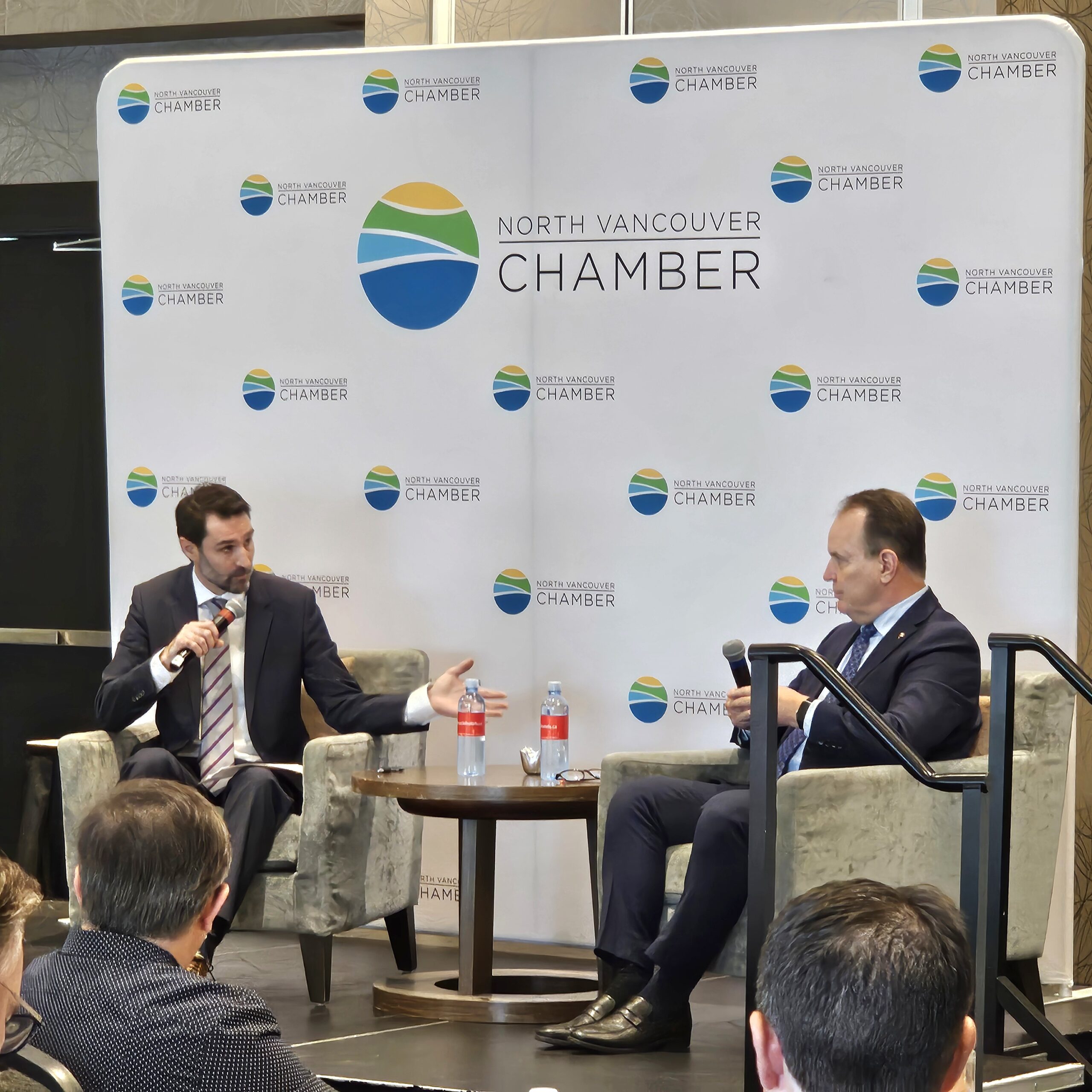
Labour stability was another major focus of the conversation, particularly given the impact transportation disruptions can have throughout Canada’s supply chains.
Reflecting on recent port, rail and transportation-related labour disruptions, Minister MacKinnon said the experience has reinforced the need for a better system.
“Labour disruptions literally cause ships to turn around in the water and in many cases not return,” he said.
During the audience Q&A, representatives from the marine sector raised concerns about the shortage of skilled seafarers and the need for greater investment in training and workforce development.
“These are trades, whether we call them trades or not,” Minister MacKinnon said. “These are obviously skilled trades.”
Marine safety and growing trade capacity
As Canada looks to increase exports and expand trade capacity, the conversation also addressed the impact that increased marine activity could have on local waterways and waterfront communities.
Questions from the audience focused on marine safety, spill response, workforce training and the infrastructure required to support growth while maintaining strong environmental protections.
“Safety is not something we’re prepared to compromise on at any time,” Minister MacKinnon said, identifying environmental, human and occupational safety as core priorities for Transport Canada.
The North Shore’s transportation bottlenecks
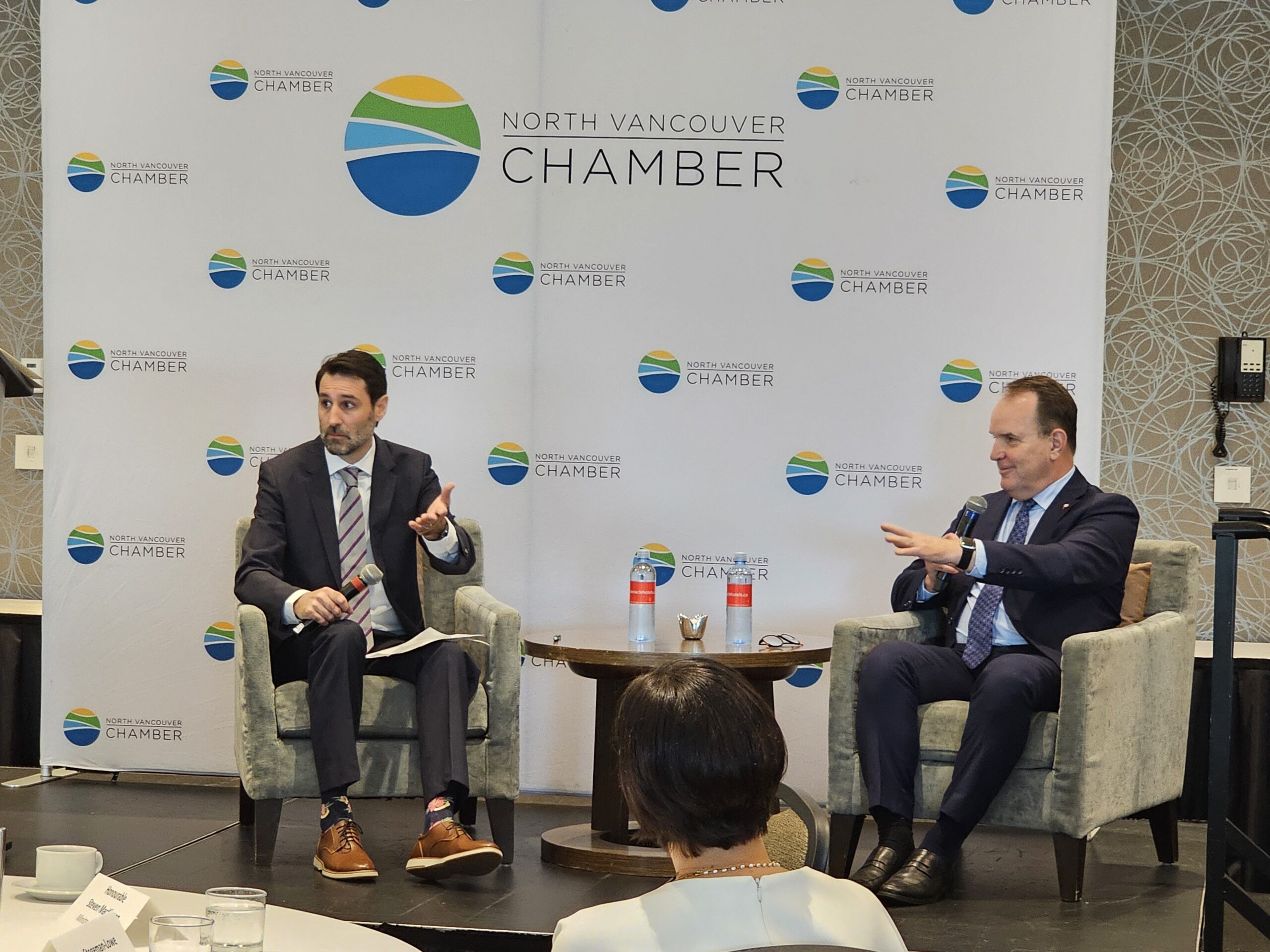
The conversation also turned to one of the issues most familiar to North Shore businesses and residents: congestion and the limited connections between the North Shore and the rest of Metro Vancouver.
Jonathan raised concerns about the ageing and heavily utilized Ironworkers Memorial Bridge and Second Narrows Rail Bridge, emphasizing their importance to the movement of people and goods.
Minister MacKinnon acknowledged the importance of these connections, describing them as “top of mind” and “absolutely essential.”
While he did not commit to a specific solution, he emphasized that finding a path forward will require collaboration among communities, railways and all levels of government.
“It’s going to require some intensive discussions with communities, with railways, obviously with the provincial government, with municipalities and the federal government,” he said. “We’re going to have to come up with a reliable solution.”
Jonathan reaffirmed that transportation will remain a key advocacy priority for the Chamber.
“We will continue to be vocal on the issue of transportation,” he said. “Not just for quality of life, but for all the businesses that operate here on the North Shore, because those bridges are critical for many of those businesses.”
Looking Ahead
The discussion underscored the close connection between transportation policy and the future of North Vancouver’s economy.
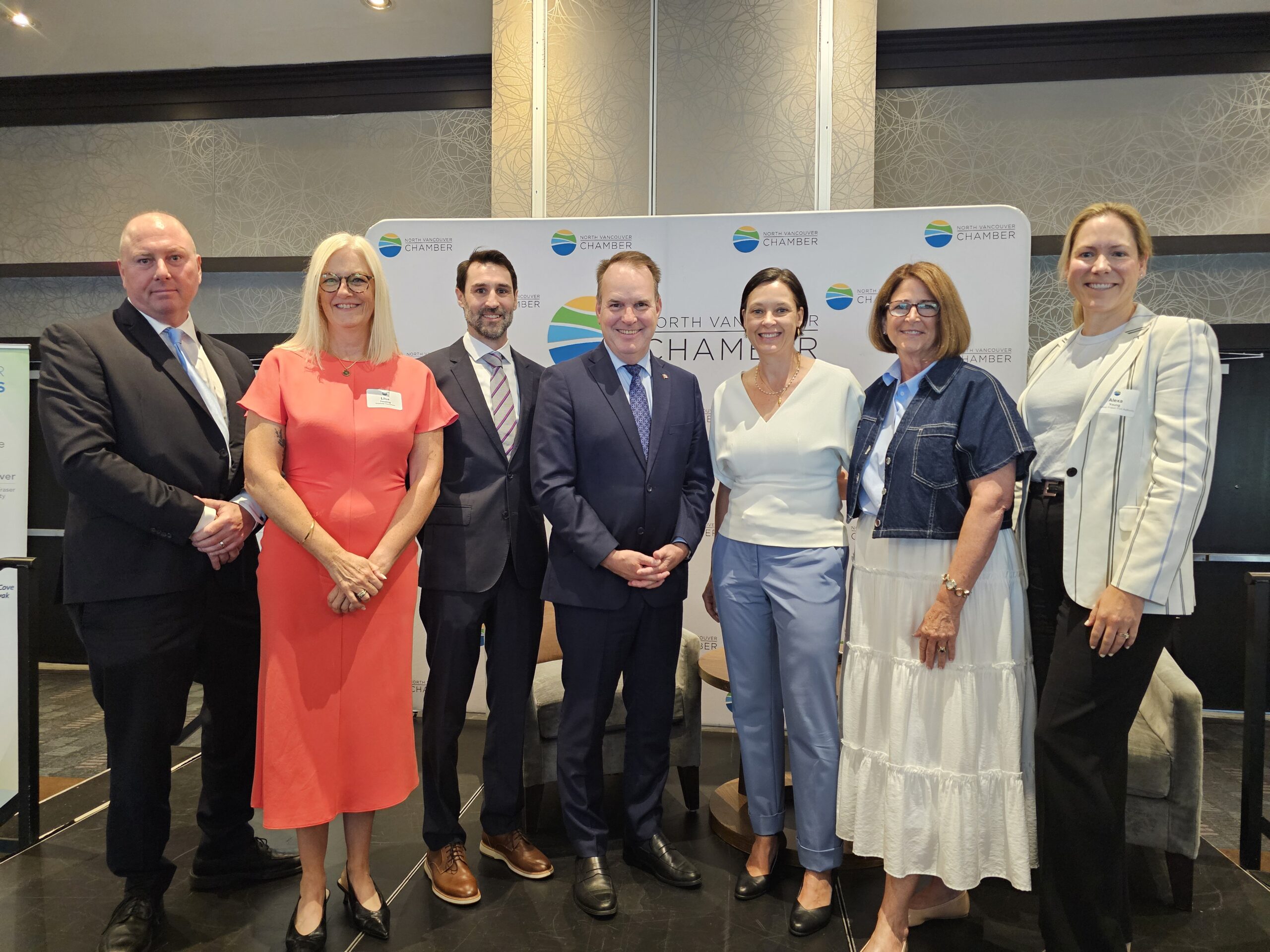
We thank Minister Steven MacKinnon for joining us for this important conversation, Kim Stegeman-Lowe for sharing SSA Marine Canada’s perspective and support as our Presenting Sponsor, and Alexa Young, Vice President, Government, External and Environmental Affairs at the Port of Vancouver, for helping close the event.
Thank you as well to all of our sponsors, Annual Partners, special guests and attendees for contributing to a timely and important discussion about the future of transportation.
The Chamber also extends its sincere thanks to our Annual Partners and Event Sponsors for making this important conversation possible:
- Presenting Sponsor: SSA Marine Canada
- Diamond Sponsor: Port of Vancouver | Vancouver Fraser Port Authority
- Event Champion: Neptune Terminals
-
Venue Sponsor: Pinnacle Hotel at the Pier
Media Coverage
North Shore News: Canada needs to boost non-U.S. trade in light of tariff war, says transportation minister