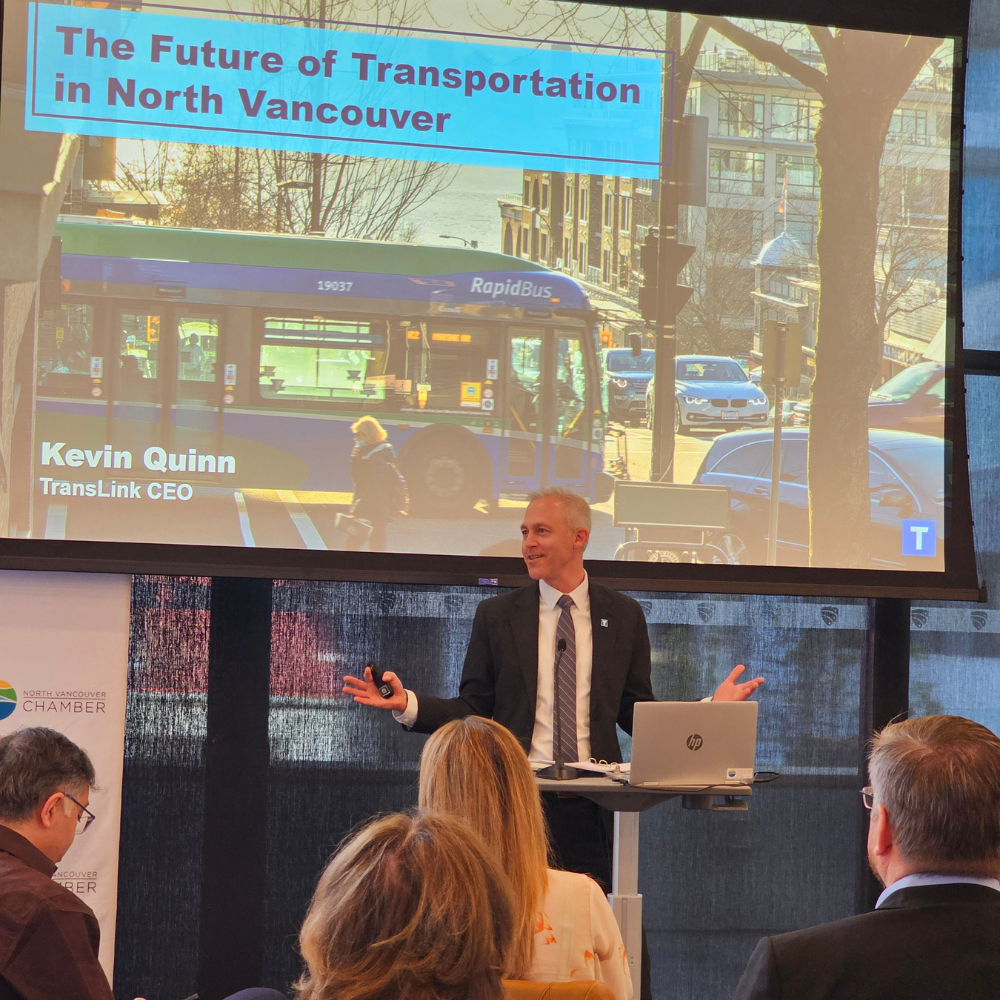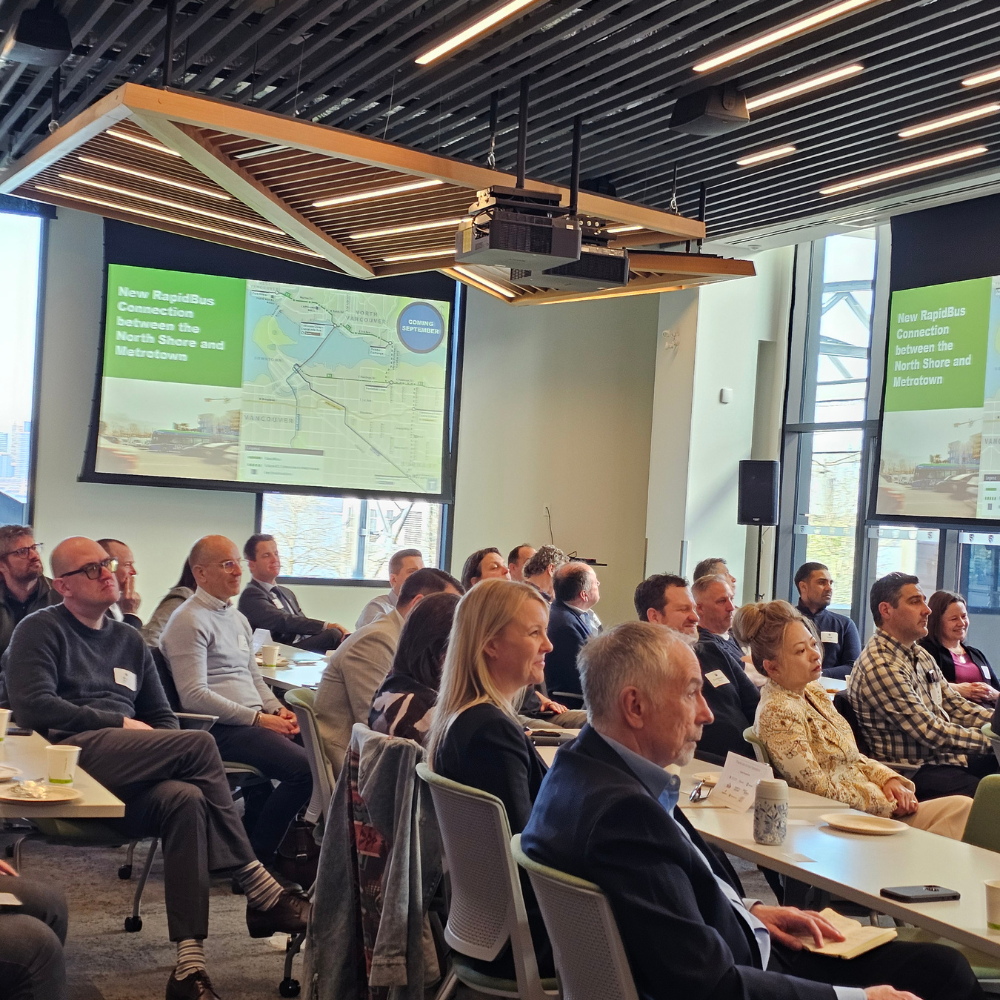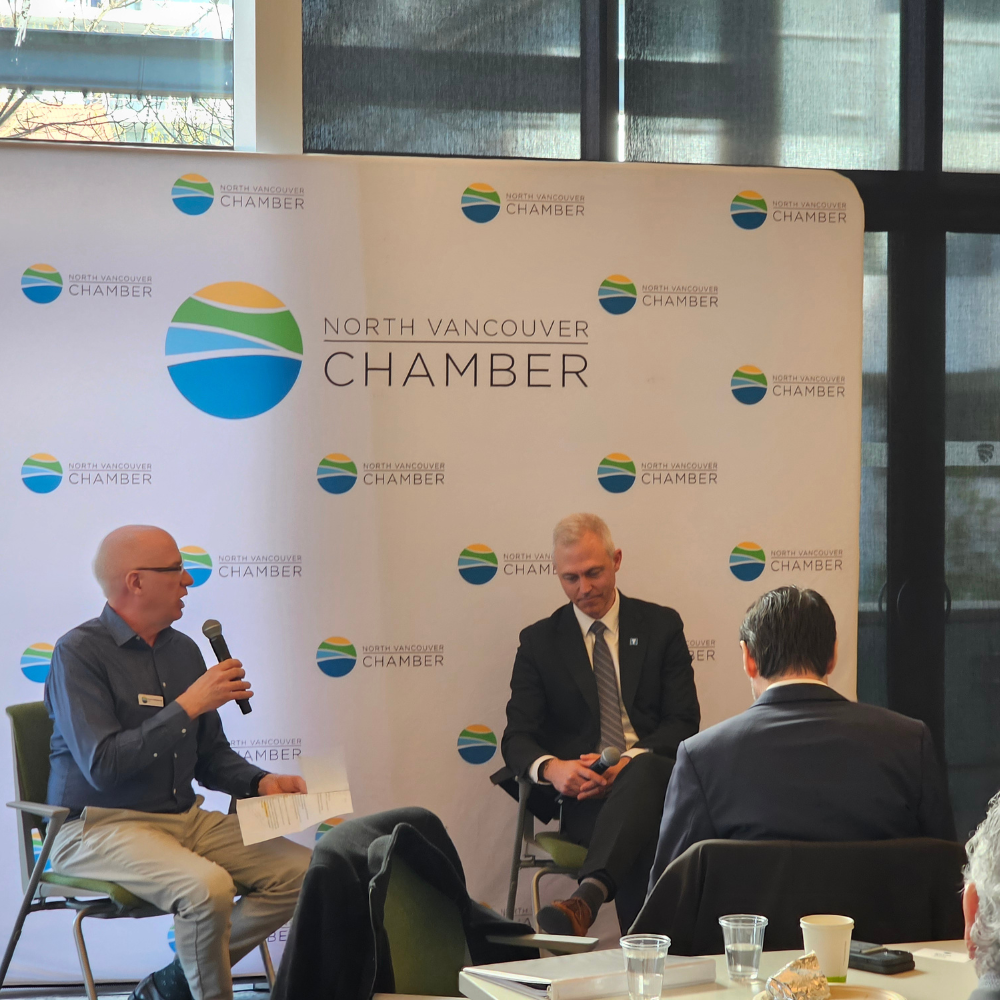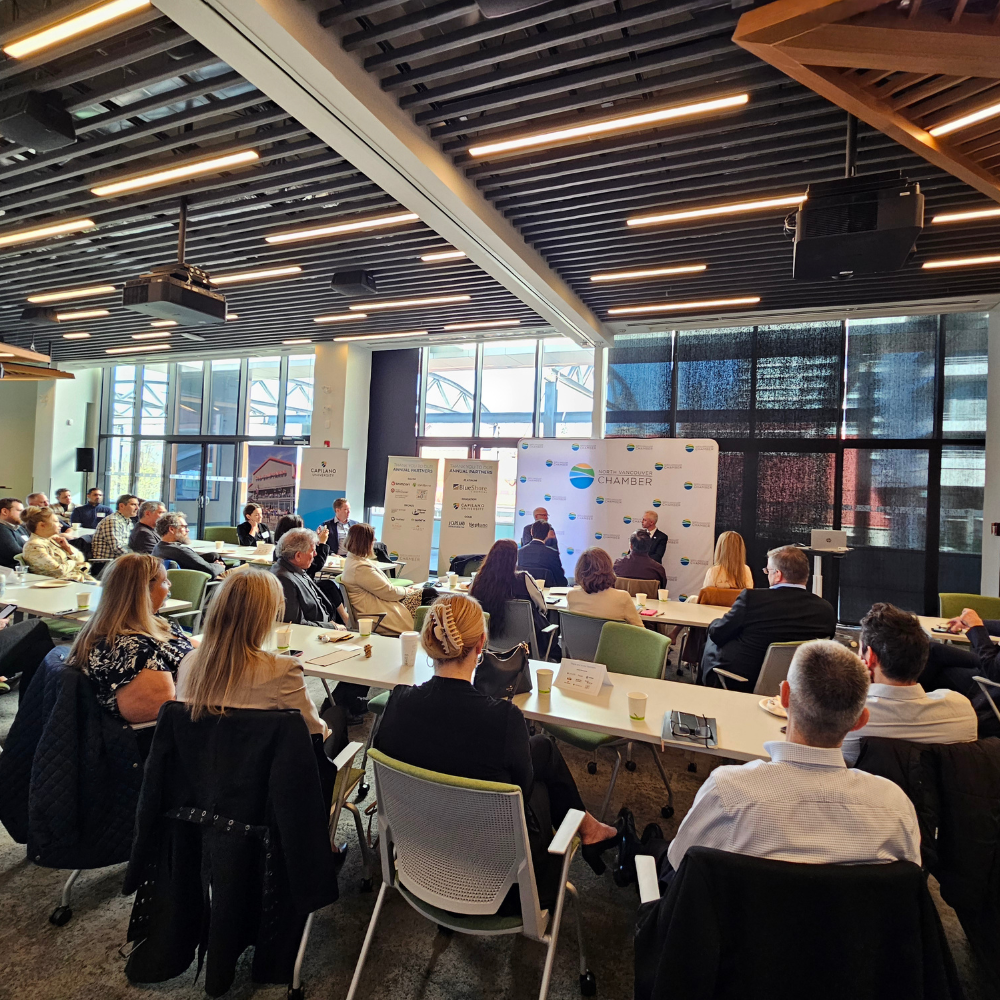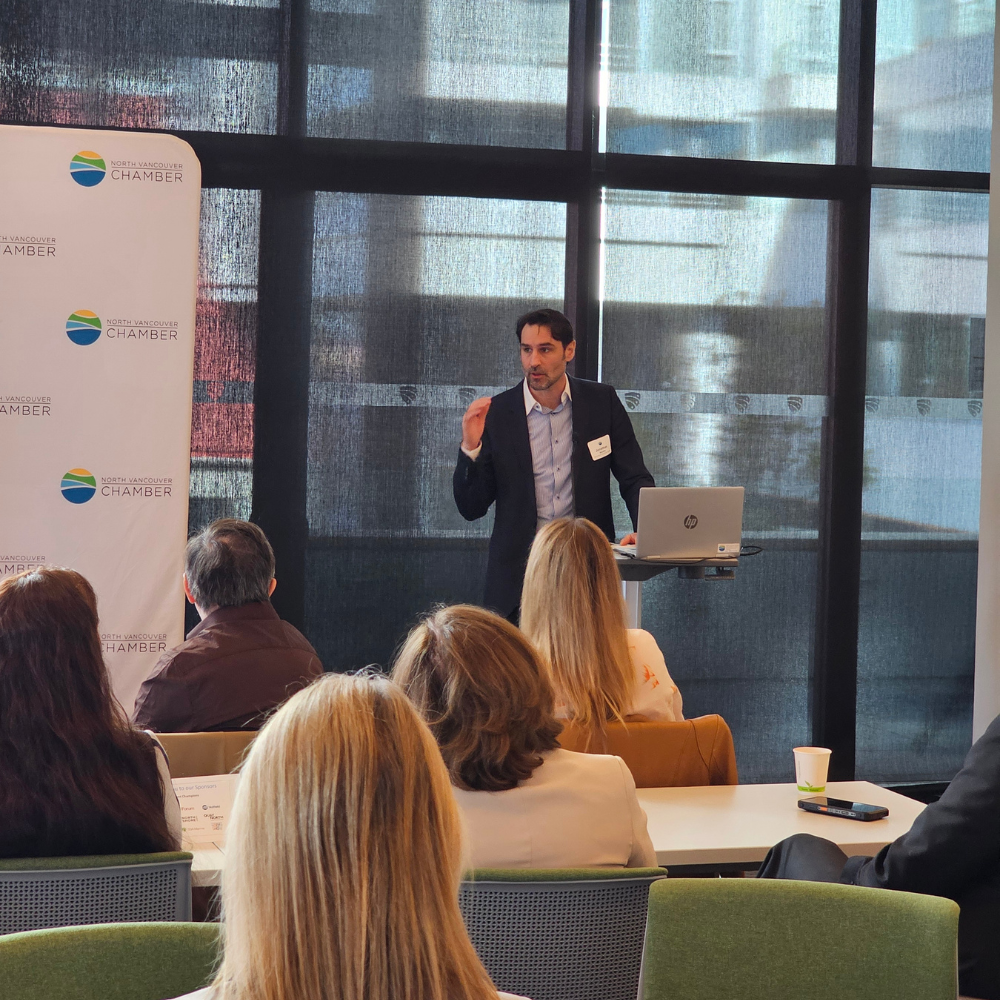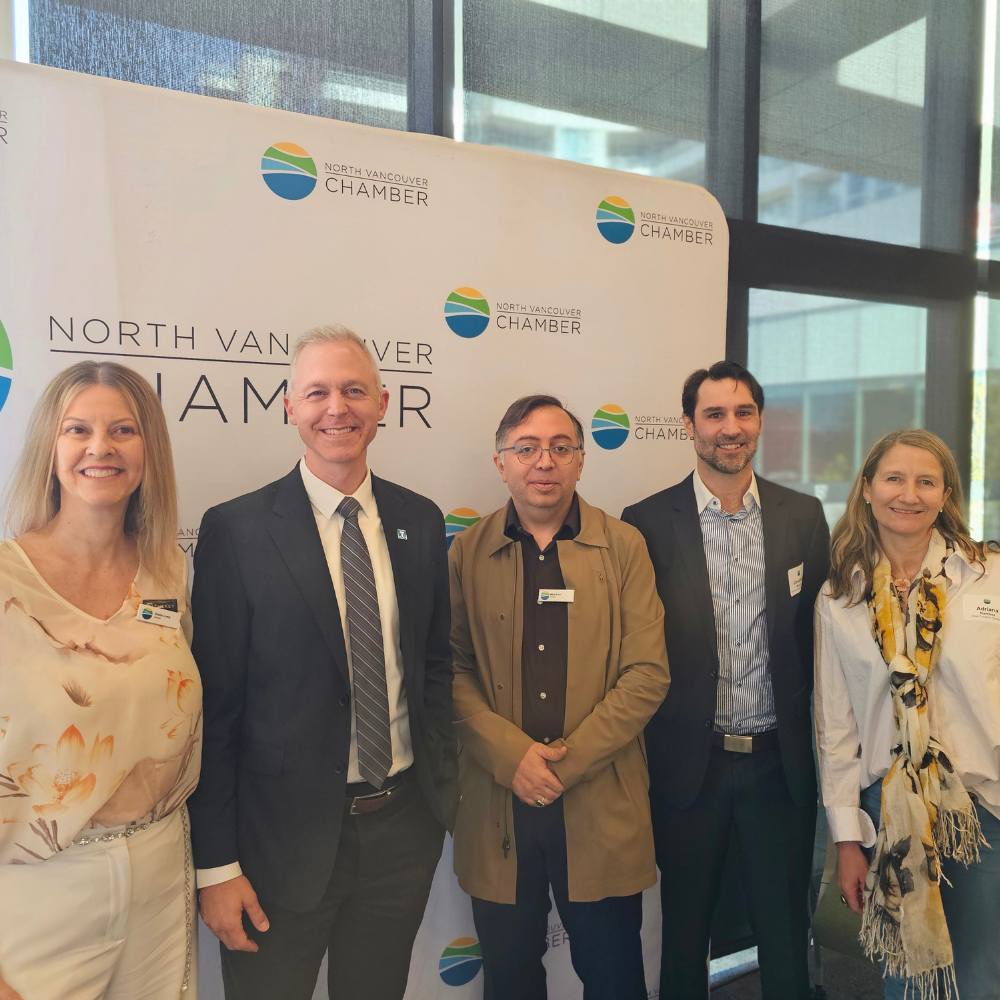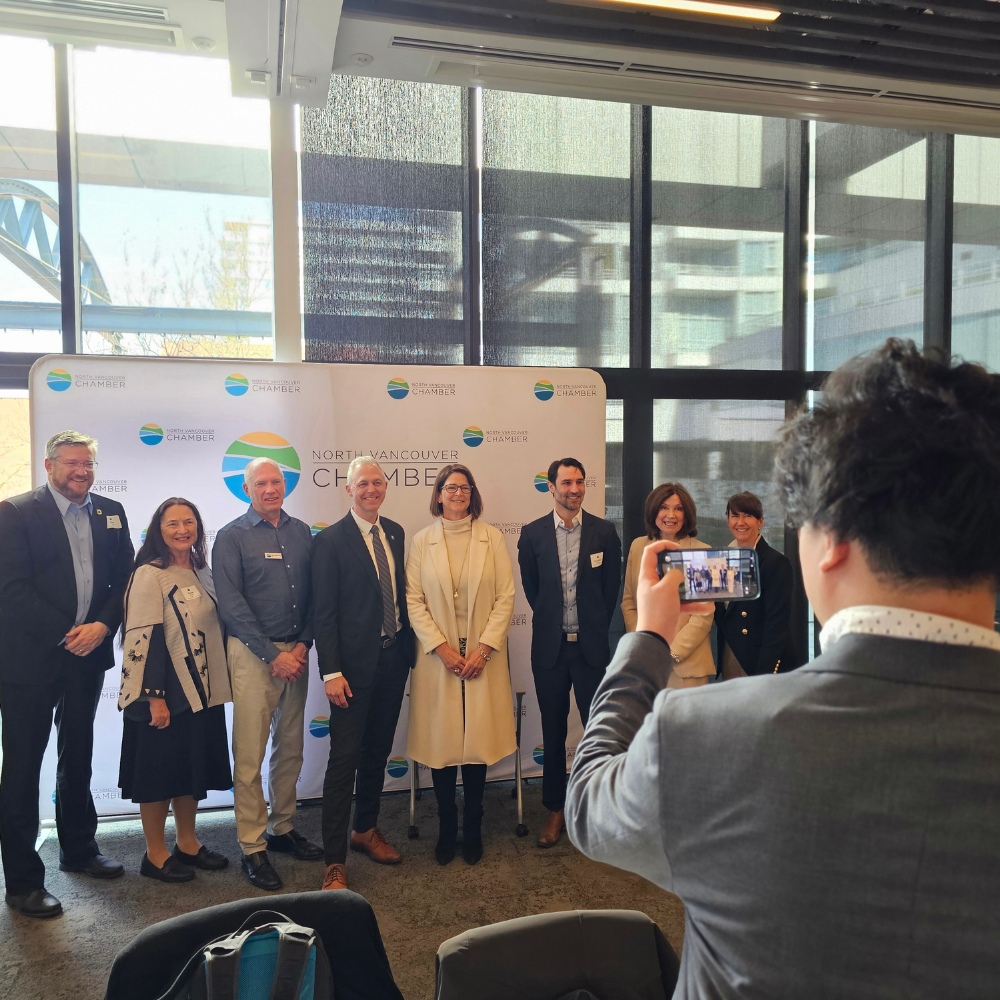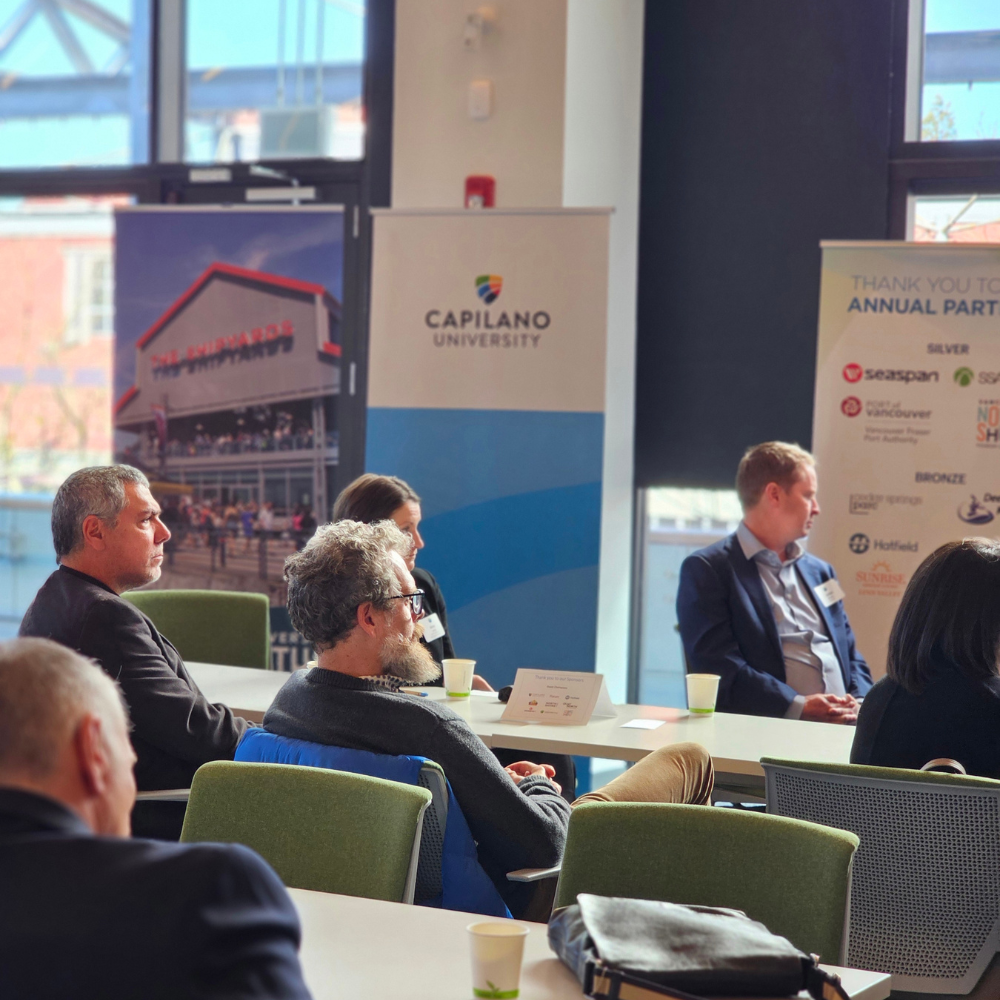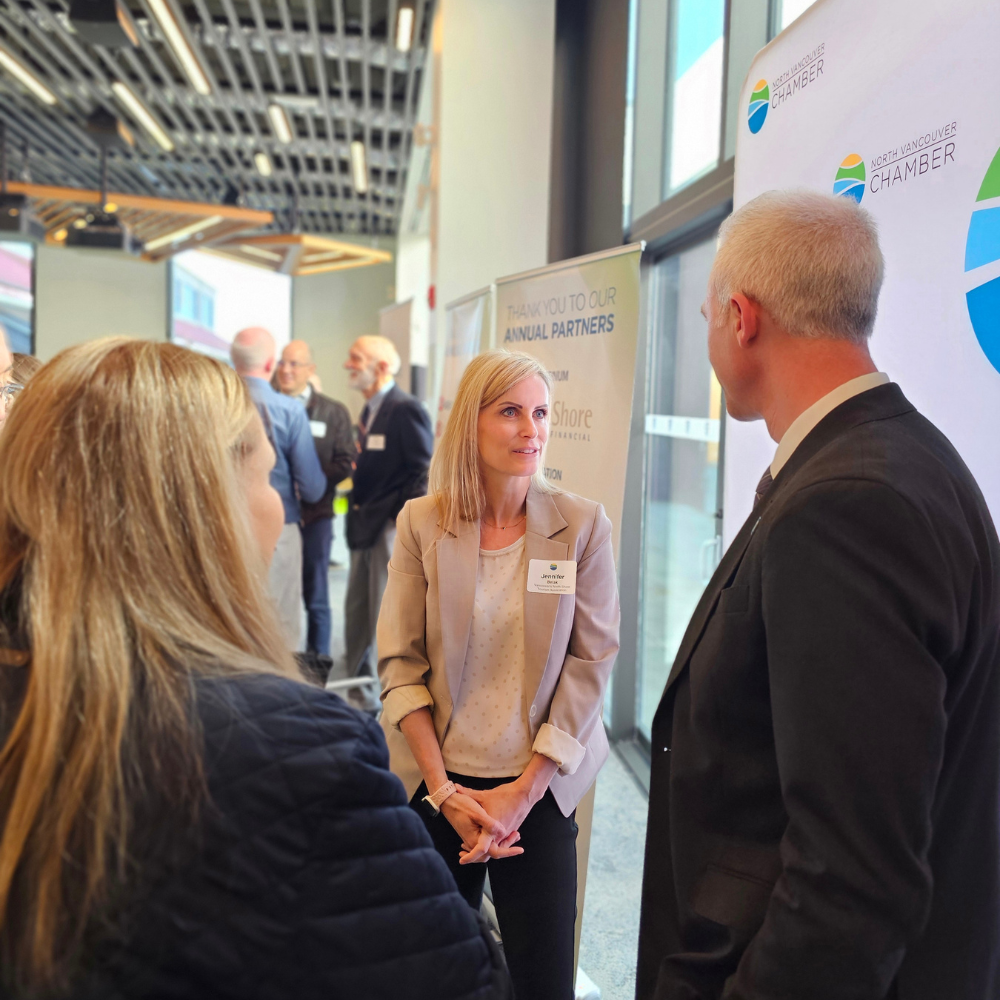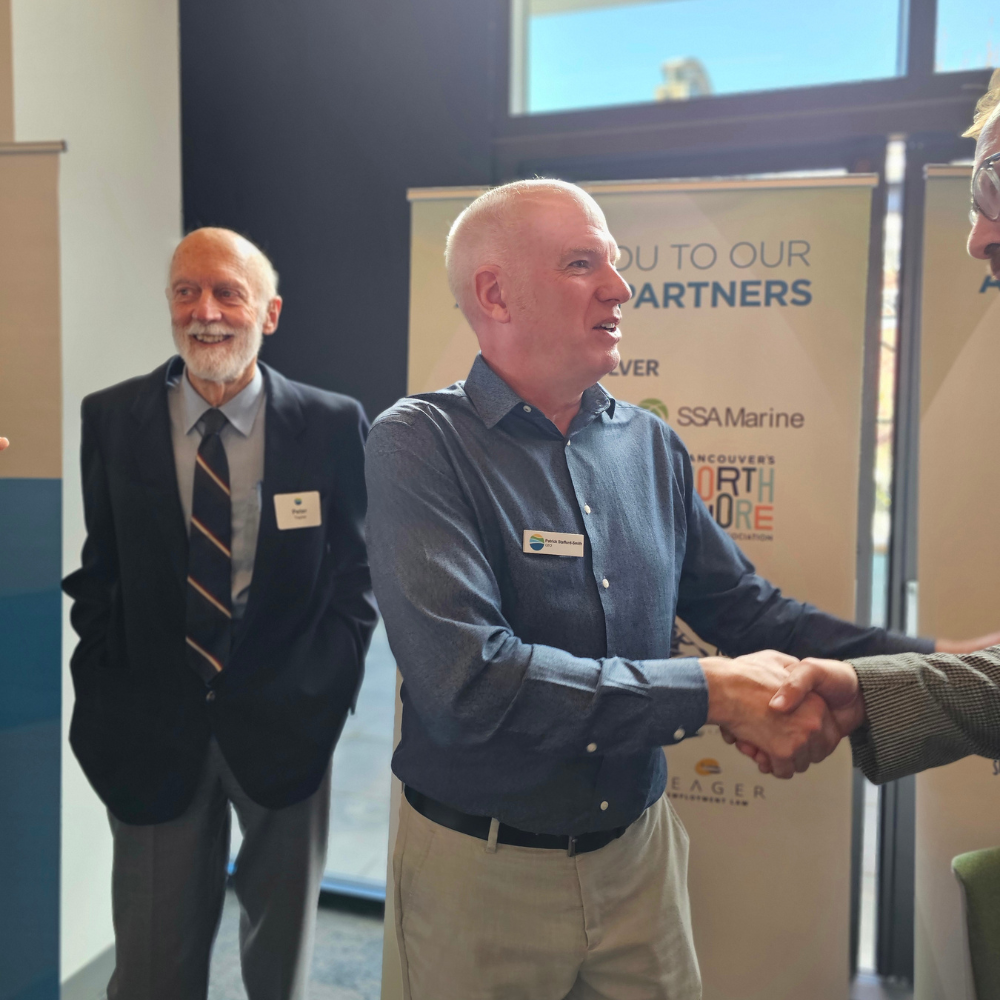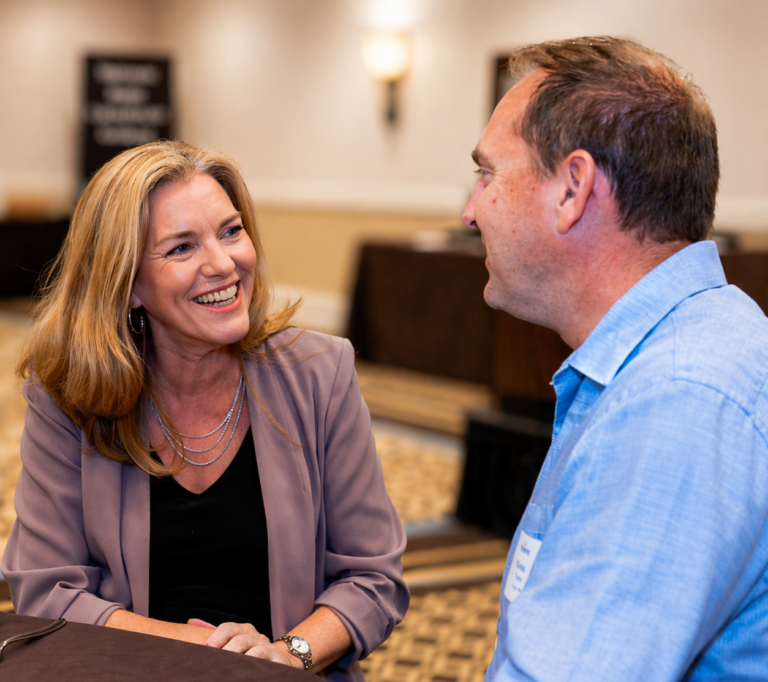
The North Vancouver Chamber welcomed business leaders, elected officials, community partners, and stakeholders to Capilano University’s Lonsdale Campus on April 9 for The Future of Transportation for the North Shore. The sold-out event featured a compelling keynote from TransLink CEO Kevin Quinn and a robust Q&A that reinforced why transportation remains the region’s top economic priority.
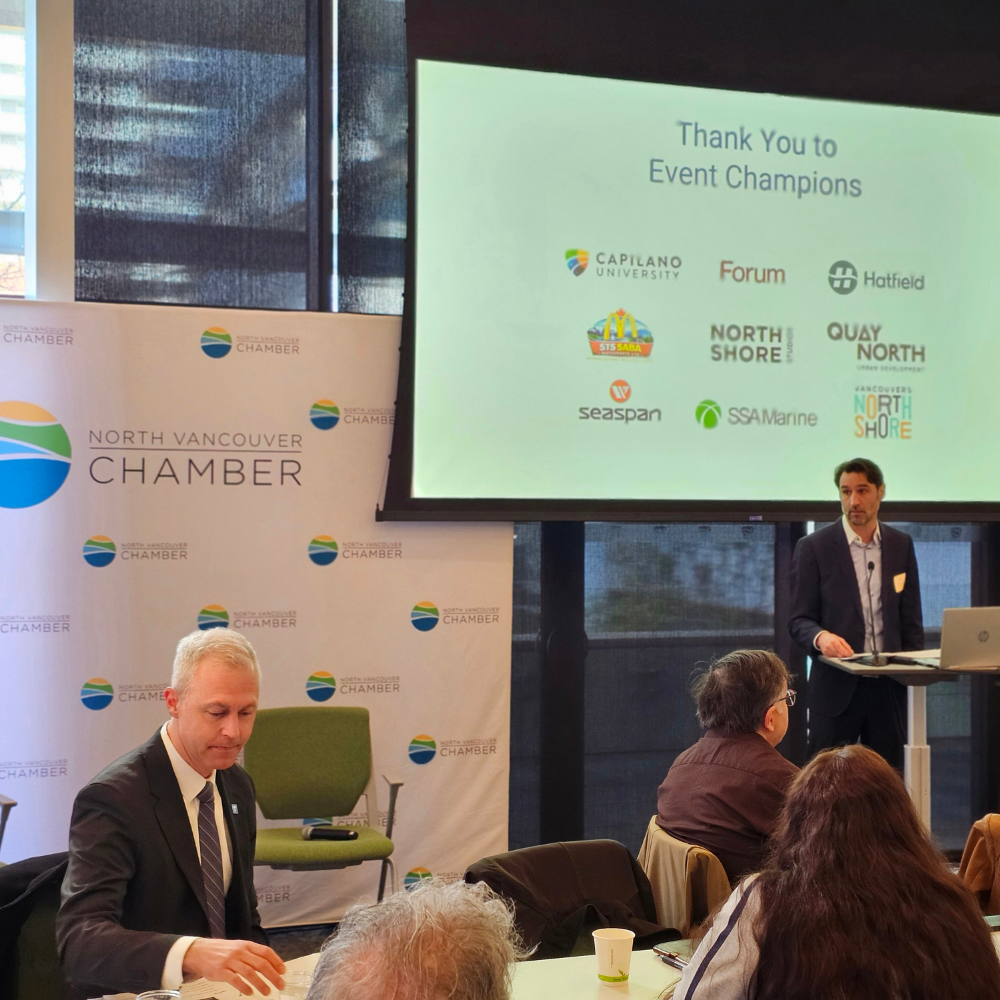
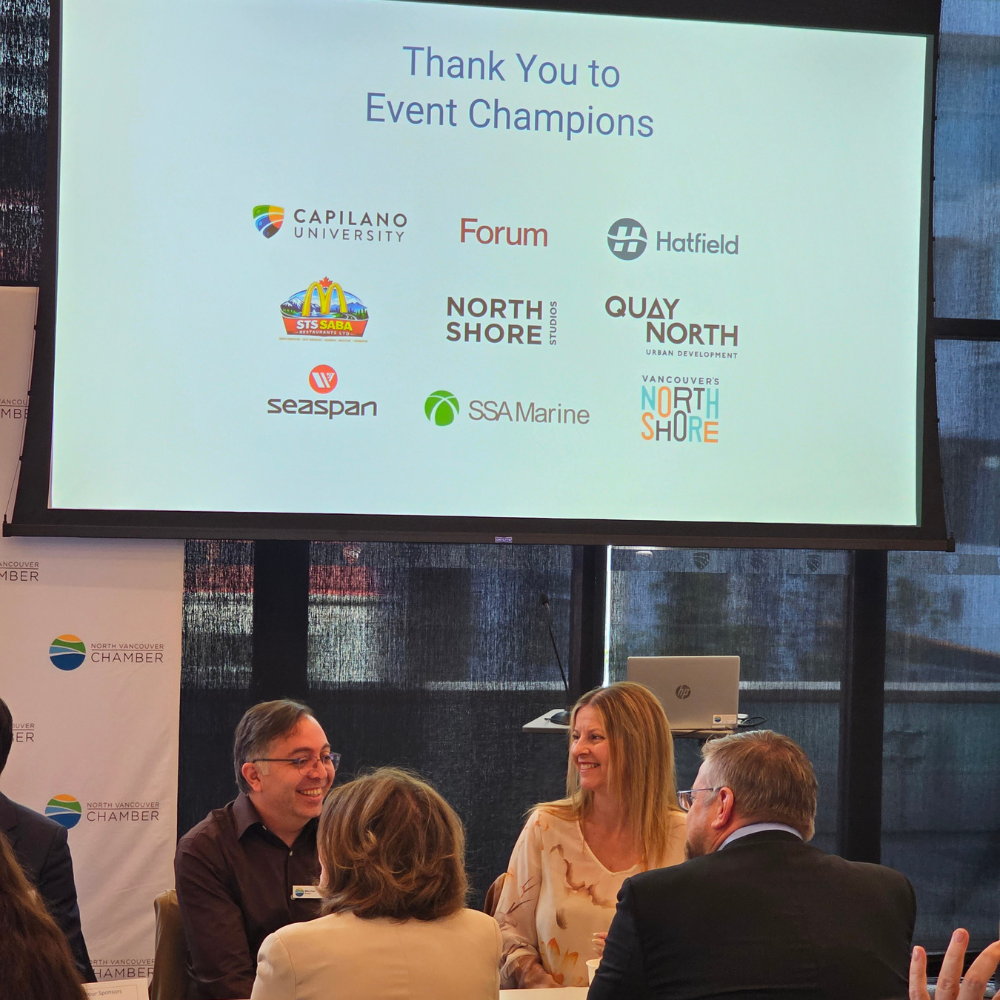
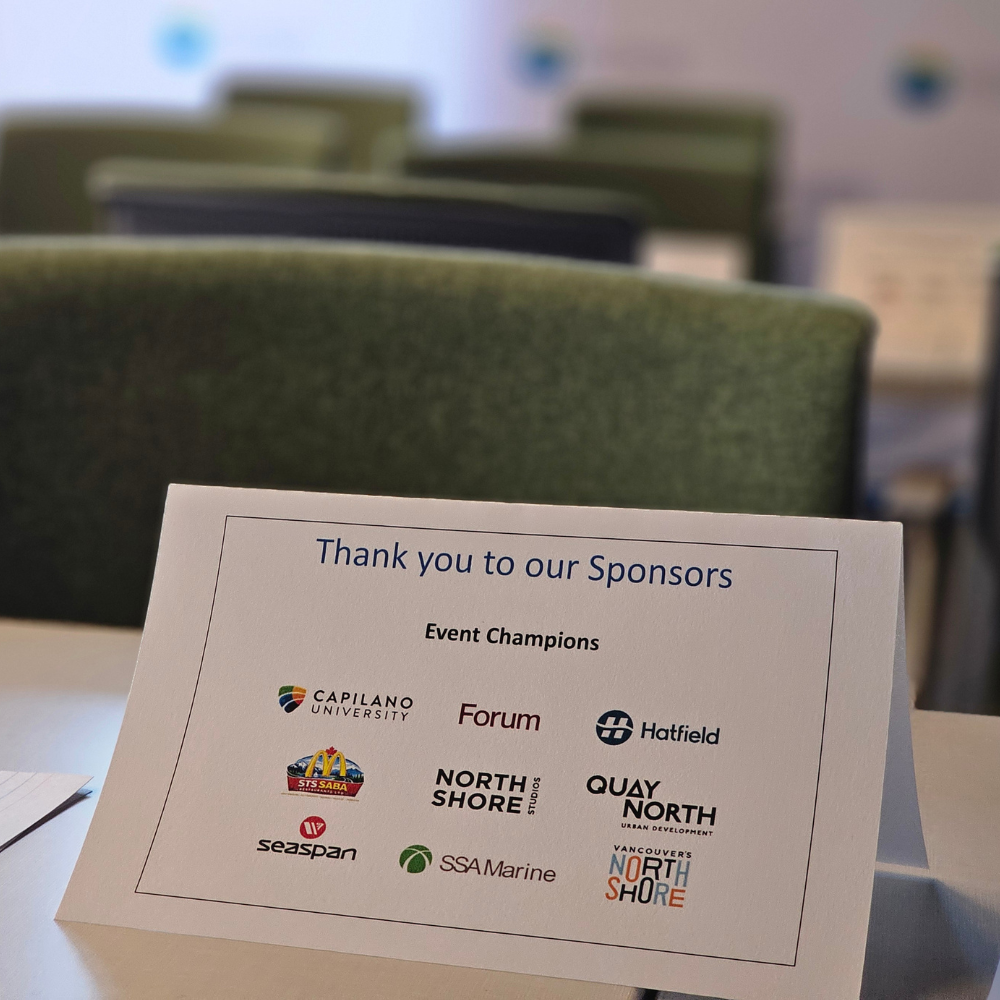
North Vancouver Chamber Board Chair Jonathan Mosley opened the morning with a warm welcome and highlighted the generous support of our Event Champions: Capilano University, Forum Asset Management, Hatfield, North Shore McDonald’s, North Shore Studios, Quay North Urban Development, Seaspan, SSA Marine, & Vancouver’s North Shore Tourism Association.
Kevin Quinn delivered an optimistic presentation that balanced immediate wins with long-term ambition. For North Vancouver specifically, Quinn highlighted:
- A 12% increase in bus service hours, with 17 routes scheduled for further improvements.
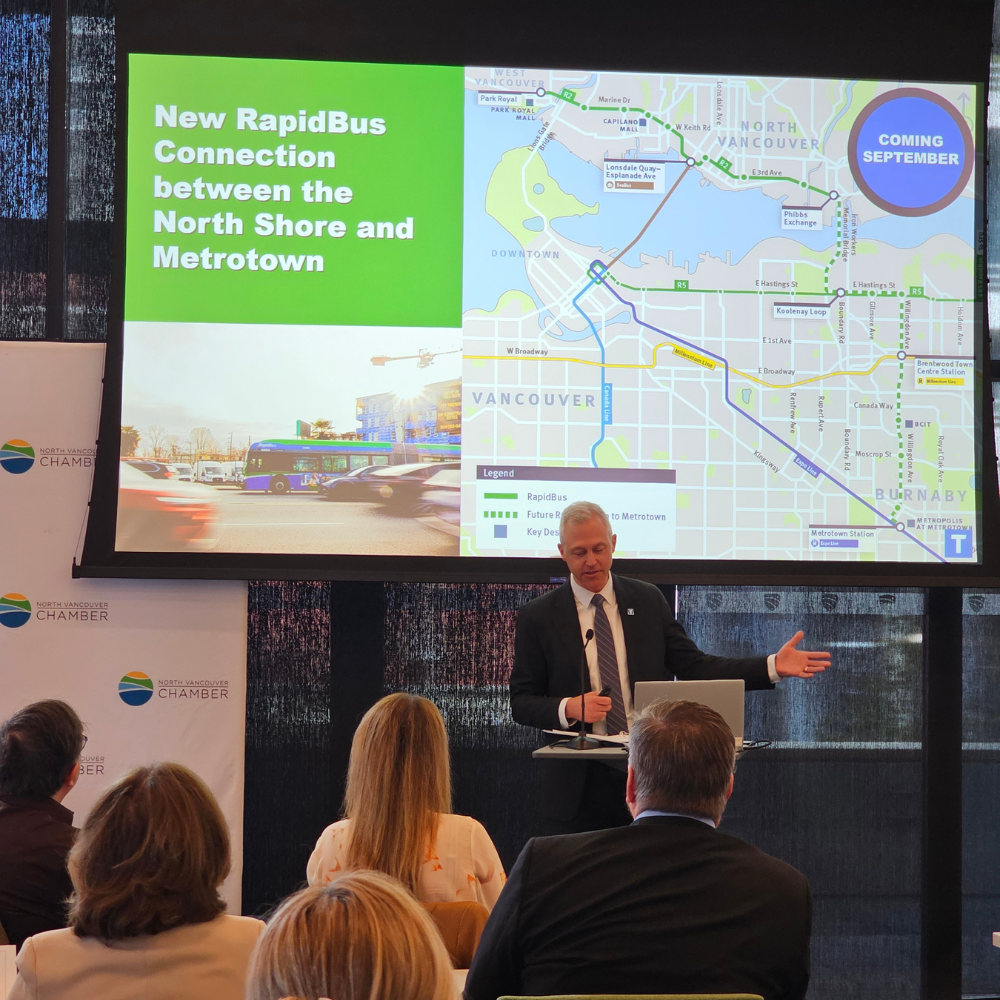
- The R2 Rapid Bus extension, now launching in September 2026 (three months ahead of schedule)
He also spoke about TransLink’s broader mandate: $100 million+ in Major Road Network funding in 2026 alone, active transportation investments (including the Spirit Trail and protected bike lanes), transit-oriented development in Lower Lonsdale, and partnerships that bring communities to life—from car-free days to the new transit heritage exhibit at the Museum of North Vancouver.
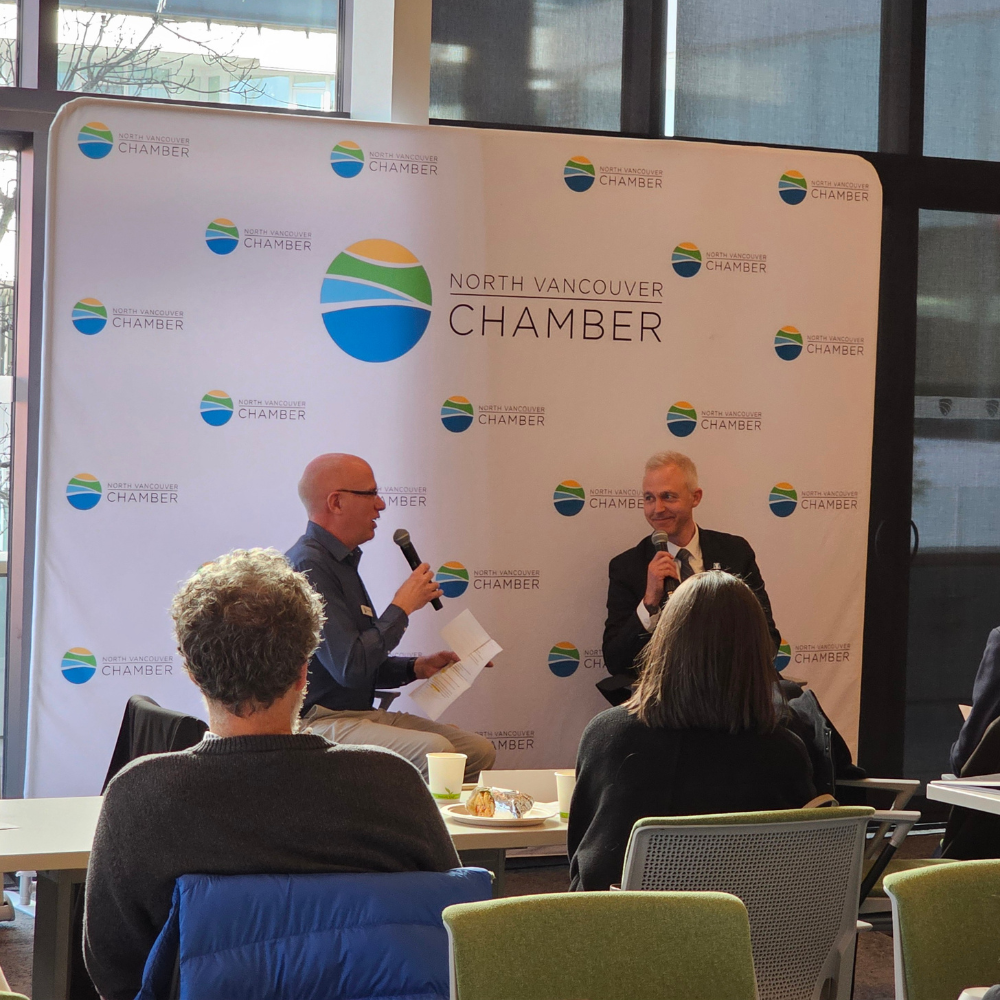
Patrick Stafford-Smith Moderates Engaged Q&A
North Van Chamber CEO Patrick Stafford-Smith moderated a dynamic 30-minute Q&A, with questions based on transportation priorities the Chamber has heard directly from its business membership. Key topics and Kevin Quinn’s responses included:
- Ridership & Choice Riders: Quinn noted that roughly half of TransLink riders are “choice” riders who opt for transit to avoid parking costs or driving stress. Post-pandemic recovery has been strongest on the North Shore (often 140–150% of pre-pandemic levels).
- Investment Stages & BRT vs. Rail: The R2 Rapid Bus is the immediate solution, with the Metrotown to North Shore route expected to serve up to 60,000 daily riders by 2035. Long-term rail studies continue in parallel, but Quinn stressed realism around multi-billion-dollar capital asks from the provincial and federal governments.
- Ironworkers Bridge & Goods Movement: The focus is on improving bridge approaches and protecting goods movement through Canada’s largest port.
- Industrial Areas & Shift Workers: Greater emphasis on early/late service to support North Shore employers and specialized talent.
The conversation underscored a shared view: transportation is essential economic infrastructure. As Quinn put it, “We don’t build communities without electricity, without schools, without water, right? Transit is no different, and it’s not optional.”
Ongoing transportation advocacy
Jonathan Mosley closed the program by reinforcing the Chamber’s decade-long leadership on transportation advocacy.
The North Vancouver Chamber will continue to drive this dialogue on behalf of our business community. Transportation isn’t just about getting from A to B—it’s about jobs, housing, tourism, goods movement, and the overall livability and competitiveness of the North Shore.
Thank you again to our event sponsors and everyone who joined us and contributed to this important dialogue.
A prize draw, generously donated by The Polygon Gallery, awarded one lucky business a $3,500 daytime rental of the waterfront venue.